Custom management systems

Management systems
built around how you run.

Custom management software for inventory, jobs, clients, staff, and compliance. The system fits your operation instead of forcing your operation into someone else's product, and it costs less per year than most teams pay per seat for software they half-use.

The spreadsheet stack is a management system too. Just a bad one.

Most small operations already run on a management system: four spreadsheets, a group text, a whiteboard, and one person who knows where everything is. It works until that person is on vacation, the spreadsheet forks into three versions, or an auditor asks for records nobody can find. A custom system replaces that stack with one place where work gets logged, found, and reported.

The alternative most owners try first is generic SaaS, and the pattern repeats: the product does eighty percent of what you need, the missing twenty percent is the part specific to your business, and the price rises every time you hire. Per-seat pricing punishes growth. We charge a flat monthly fee, so the fifth login costs the same as the first: nothing.

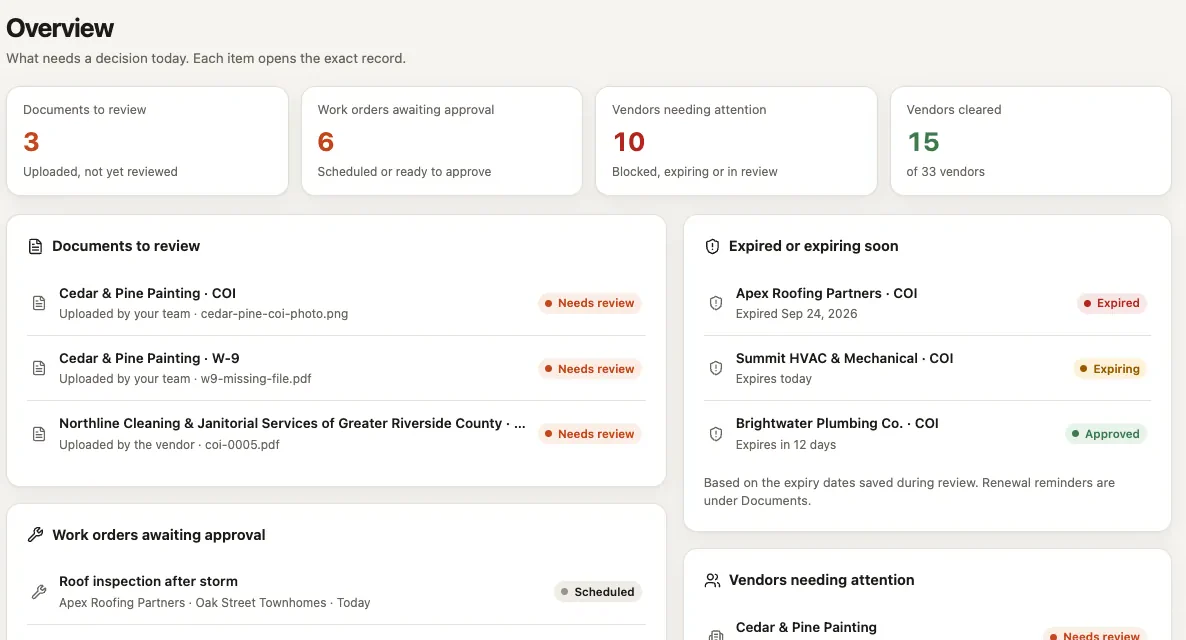
This is also the work we know best, because we run our own management products in production: K9Codex for working-dog operations, Vendor Manager for procurement, and Talent Manager for people operations. Real organizations use them daily. Your build gets the same architecture, the same audit-friendly recordkeeping, and the same standard.

Typical engagement
Setup$350 to $1,000Scoped and quoted flat before work starts
Running in2 to 4 weeksYou see working software each week
Monthly$35 to $60Flat. No per-seat pricing, ever
A typical management system build
  • Inventory tracking with barcode lookup
  • Low-stock alerts and reorder lists
  • Staff accounts with roles
  • Job and supplier history
  • Owner dashboard and reports
Setup$650one time
Monthly$45/mocancel anytime
Timeline3 weeksto live

Modeled on a hardware store that ran stock in three spreadsheets and one person's memory. Your scope gets its own flat quote.

What is included

Everything the price covers.

  • Built around your workflow.You describe how a job moves through the shop. The system enforces exactly that, not a vendor's idea of it.
  • Roles and permissions.Staff see what they need. You see everything. Sensitive records stay restricted without buying an enterprise tier.
  • Records that hold up.Timestamps, history, and change tracking, so an audit or a dispute is an export instead of an archaeology dig.
  • Dashboards from real numbers.One screen that says what happened this week, built from your actual data instead of a sample report.
  • Works with your tools.Stripe, QuickBooks, email, text messaging, and maps, connected where your workflow already relies on them.
  • Portals where they pay off.Clients or vendors get their own login for status, documents, and approvals, and stop emailing you for updates.
The honest comparison

Custom system, generic SaaS, or keep the spreadsheets?

The honest comparison. If a $30-a-month subscription already fits your workflow, use it, and we will say so when you ask.

 SYSTALOG customGeneric SaaSSpreadsheets
Fits your workflowExactlyMostly, you adaptBarely, held together by habit
Cost as the team growsFlat monthlyRises per seatFree, paid for in errors
Audit and historyBuilt inHigher tiers onlyWhoever edited last wins
The missing 20 percentWe build itFeature request queueAnother spreadsheet
Who owns the dataYou, exportable anytimeVendor export formatsYou, in theory

Tell us what you are tracking by hand.

Describe the spreadsheets, the whiteboard, and the part that breaks when someone is out sick. You get a flat quote and a system designed around the way you already work.

Questions, answered

Custom management software, answered straight

What does a custom management system cost?

Typical builds here run $350 to $1,000 in setup and $35 to $60 a month after, flat, with no per-seat pricing. Compare that against what a five-person team pays per year for a SaaS product at $30 per user per month, and the math usually settles it inside a year.

What can it manage?

Inventory, jobs, work orders, clients, scheduling, staff, certifications, equipment, documents, compliance records, and the reporting on top of all of it. If your business tracks it by hand today, it can be a screen with history and permissions instead.

We already use spreadsheets everywhere. Can you migrate them?

Yes, that is the most common starting point. We import your existing sheets, keep the columns your team actually uses, drop the ones nobody has touched since 2023, and add the history and access control spreadsheets cannot do.

Have you built systems like this before?

We run three of our own in production: K9Codex for working-dog training operations, Vendor Manager for procurement, and Talent Manager for hiring and personnel workflows. They are live products used by real organizations, and your build inherits everything we learned shipping them.

What happens when we need a new feature next year?

Small changes are covered by the monthly fee. Ask, and they get made. Bigger additions get their own flat quote before any work starts, exactly like the original build. There is no change-order roulette.