Can I use K9Codex without a team?
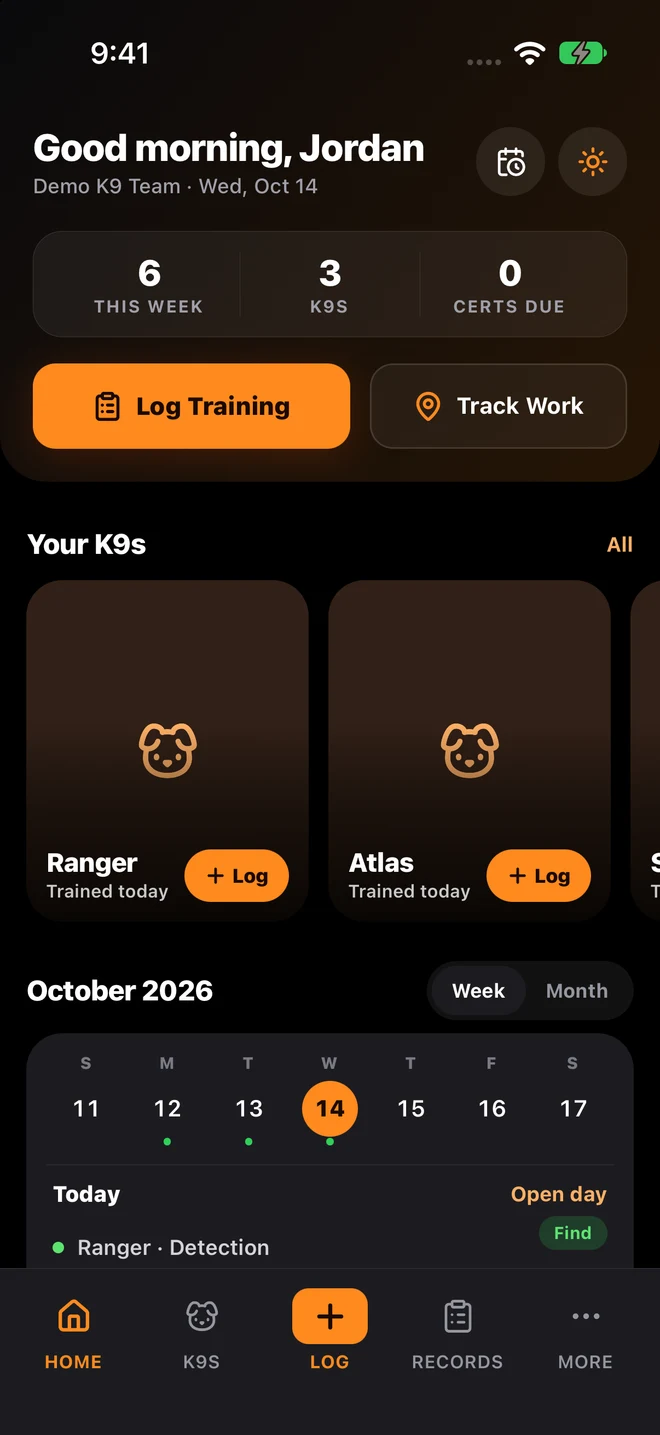
Yes. Train Independently creates a private one-handler workspace in the iPhone app. Add your K9s and training sessions without entering an organization name. Workspace access requires a subscription; Apple shows pricing and any eligible trial before purchase.
Does the app work when service drops?
The iPhone app can queue a training log when the connection drops and sync it when service returns. Check its sync status before treating a queued entry as part of the shared record. Initial sign-in and other connected workflows still require service.
Can I bring older training logs?
AI-assisted import can help extract fields from existing documents. Check every imported draft against the original, correct dates and assignments, and keep the source documents. Handwriting and document quality affect extraction accuracy.
What report files can I create on iPhone?
The Reports screen offers Training Activity PDF, Certification Status PDF, and Training Logs CSV. Available filters depend on the report. Test the actual output with your team before replacing an existing reporting process.
What should I record when an exercise needs improvement?
Keep the recorded outcome and the observations that explain it. Note what the dog was asked to do, what you observed, any repeated exercise, and the follow-up planned by the trainer. The fictional Atlas record on this page includes a slow recall even though the final recorded outcome is Met Standard. Do not turn a missing observation into a successful result.
Is a synced training entry the same as an approved record?
No. Sync status describes whether a queued entry has reached the shared workspace. Review and sign-off are separate steps for authorized team members. Before sharing a report, check which entries it includes and whether their review status meets your organization’s requirements. Neither syncing nor sign-off certifies a dog.
Does using this software make my records legally compliant?
No. K9Codex organizes records and supports review workflows. Agency policy, applicable requirements, and certification authorities determine what you must record, retain, approve, and submit.